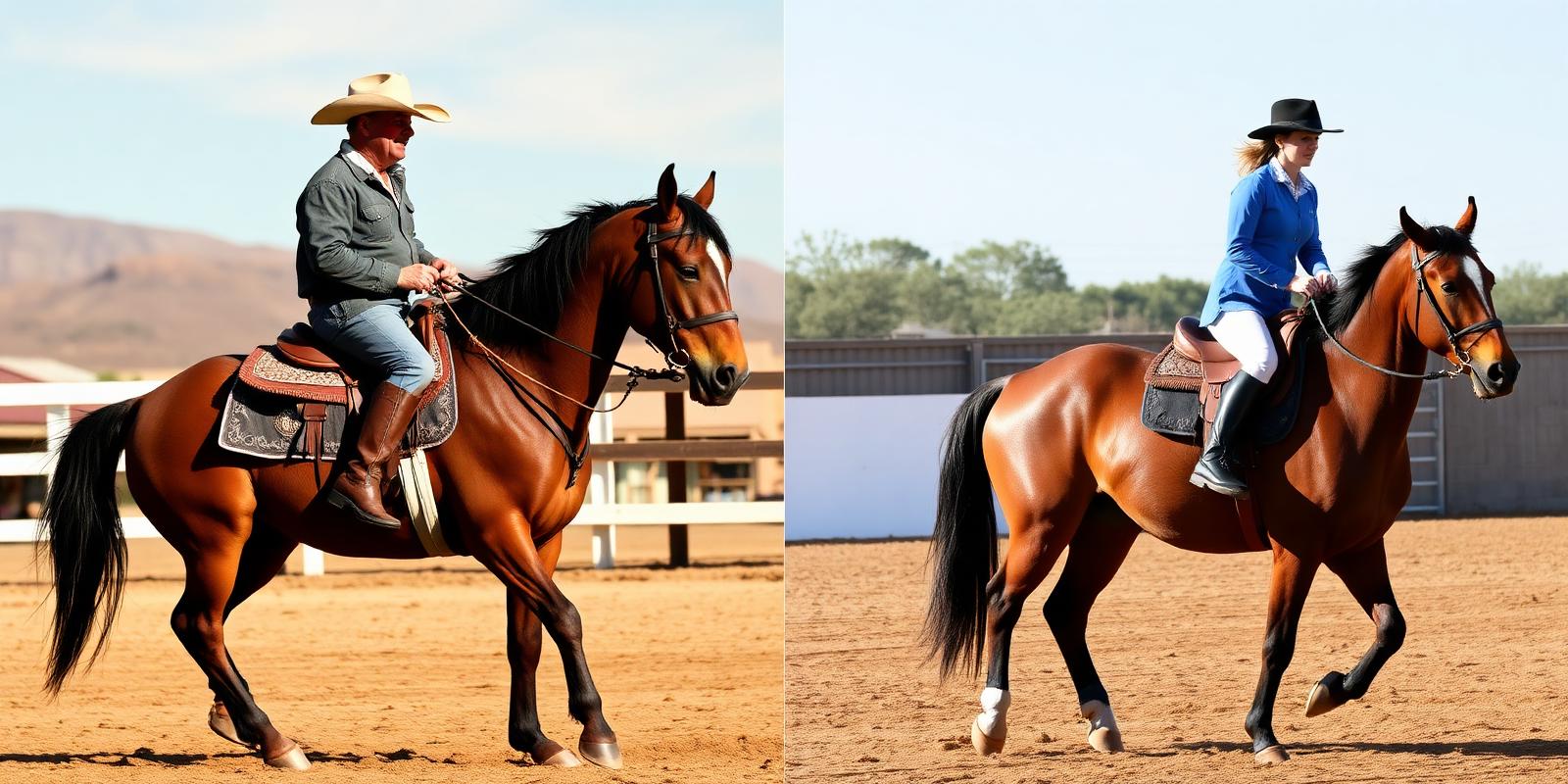
If you are new to the horse world, you have probably noticed two very different looking riders in the arena: one in a deep, ornate saddle with a horn on the front, and another in a flatter, smaller saddle with long stirrups. Those are Western and English riding, the two dominant styles in the United States, and while they share the same foundation — a rider, a horse, and a language of cues — they diverge in history, equipment, and purpose.
Western riding grew out of the working traditions of American cowboys and ranchers. The Western saddle was designed for long days on the range: a big, heavy tree distributes weight across the horse's back, the horn was historically used to wrap or tie a rope around when roping cattle, and the deep seat keeps a rider secure through quick stops and turns. The reins are typically held in one hand, and the neck rein — guiding the horse by laying the rein against the neck rather than pulling on the bit — allows the rider to keep the other hand free for a rope or gate latch. Western horses are often trained for slow, collected gaits and maneuvers like sliding stops, spins, and rollbacks.
English riding, by contrast, traces its roots to European cavalry and foxhunting traditions. The English saddle is smaller and lighter, with a closer contact feel that lets the rider's leg wrap around the horse. There is no horn, and the rider holds the reins in two hands with direct rein contact on the bit. English disciplines cover a wide range, from the precision and elegance of dressage to the athleticism of show jumping and the speed of eventing. English riders post the trot — rising and sitting in rhythm with the horse's strides — and the overall aesthetic emphasizes lightness, forward movement, and communication through subtle seat and leg aids.
The physical demands differ, too. Western riders sit deep and relaxed, letting the horse do much of the work while the rider steers and cues with minimal hand movement. English riders are more upright and engaged, using their entire body — calves, seat, hands, and core — to shape the horse's movement. That does not mean one is easier than the other. Both take years to master, and both will teach you humility, patience, and feel.
At All Seasons, we teach both styles, and we often encourage new riders to try each before committing. Some people fall in love with the laid-back rhythm and rich tradition of Western riding. Others are drawn to the athletic challenge and refined partnership of English. Many of our students do both, because the skills are transferable: a good seat is a good seat, and a horse that trusts you does not care what kind of saddle you are sitting in.
If you are unsure where to start, come out and watch a few lessons. Talk to our instructors about what you want from riding — fitness, competition, trail riding, or simply time with horses — and we will help you find the style that fits. Whether you end up in cowboy boots or tall boots, the important thing is that you end up in the saddle.